Tuesday, May 17, 2011

Florida Keys Thru North Carolina's Outer Banks


Cape Florida Lighthouse (near Miami)
The last month has been a whirlwind of activity as we visited the 4 great National Parks in South Florida and then meandered up the coastlines of Florida, Georgia, South Carolina, & North Carolina.  Here are some of the highlights & notes on our travels this month:
  • We visited 12 new (to us) National Park Service sites including the Everglades, Big Cypress, Fort Sumter, Cape Lookout, Cape Hatteras, & The Wright Brothers Memorial near Kitty Hawk.  In addition, we revisited 7 sites to get new passport stamps and see some things missed on our visits there 5 years ago.  This brings our grand total to 244 out of a possible 395 National Park Service Sites.  The best part of visiting these places is that we are learning so much and almost overloaded with all of the information that we receive.  At most of the sites, they have a great video on the history of the site and/or the geology and wildlife of the area.  We make it a point to watch the video, see the exhibits, and take a trail or listen to a ranger presentation.
  • We photographed an additional 37 lighthouses (some truly great ones) and were able to climb 10 of these to the top.  This brings our grand total to 658.
  • We discovered that there are many more islands than we thought along the southeastern coastline and how important the barrier islands and the Atlantic Intercoastal Waterway are to this area.
  • Our fuel mileage has greatly improved since the roads close to the coast are all flat – with bridges and overpasses being the only thing that get us elevated.
  • The most outstanding event was our trip out to Dry Tortugas National Park.  This Park is 68 miles west of Key West on Garden Key where the very large Fort Jefferson was built.  Fort Jefferson was built to protect the Gulf of Mexico area.  The weather was great, the boat ride was smooth, the water was beautiful, there were numerous birds to see, and the fort tour was very interesting.  This is an all day trip and was for us on the expensive side ($150 each, with breakfast & lunch included).  But with reaching another National Park & seeing 3 lighthouses, it was more than worth it to us.
  • On the drive out and back to Key West, we took photos of the reef lighthouses (photo of one is included at the end).  Ships follow the Gulf Stream which flows north close to the Florida Keys.  When sailing south, ships try to thread the needle between the keys and the Gulf Stream.  Submerged dangerous reefs extend out from the keys & numerous ships have met their demise on these hidden reefs.  To aid the mariners, lighthouses were built offshore on reefs  along the keys.  By the way, “keys” are islands created by exposed portions of giant coral reefs.
  • With the rest of the country suffering from tornadoes, rains, floods, drought etc., we feel blessed to have enjoyed exceptional weather.  Our only minor complaint might be the unseasonably warm weather in Florida.
  • Traveling in the east as opposed to some of the western states has presented more challenges with greater populations leading to heavier traffic.   We have, however, been able to find a few isolated roads that we can travel at a slower pace.
  • We really enjoyed the outer banks in North Carolina.  You can drive along this almost 100 miles of barrier islands and take 2 ferries where there are no bridges.  In addition to the beautiful islands, there are some truly great lighthouses – with the Cape Hatteras one being the most famous.   
  • In order to get to some of the islands to see lighthouses, we took passenger ferries and sometimes our 5th wheel on vehicle ferries.  In all, we managed to ride on 13 different boats.  The North Carolina ferries are really great and the fares are very cheap (the ferry from Cedar Island to Ocracoke Island with our RV was over 2 hours sailing time and cost only $45 and the other ferry was free).
  • We did have a couple of small glitches this month.  Jan’s glasses frames broke, but with a spare pair on board this was not a big deal.  The other glitch was that the alternator light came on in the truck.   We made it to the campground we were headed for & the next morning drove into town and had it replaced (and we didn’t have to do any re-planning).  So, we do not consider these minor problems as an indicator that the gremlins have come back onboard.
  • We have complicated and added to our travel itineraries recently.  Since we are becoming more interested in photographing birds, we have started visiting National Wildlife Refuges and collecting passport stamps and patches.  Now we will not only have to ensure that we do not miss seeing a lighthouse or a National Park Service Site, but will have to keep track of the more than 500 refuges that we have not visited yet.
We are now on the eastern coast of Virginia at Cape Henry and can see Cheasapeake Bay.  We plan to cross the Bay on the long bridge/tunnel combination & then go up the coastline of Virginia, Maryland, & Delaware until we reach Philadelphia.  There we will fly back to Texas for a visit with family & to see our eldest grandchild graduate from High School.  Then we will continue North to Quebec & eventually to Prince Edward Island.
Hope you all are doing well.
Brown Pelican taking off over shallow water at Dry Tortugas National Park
Cape Lookout Lighthouse (one of our favorites) - In Cape Lookout National Seashore - North Carolina
Dragonfly in Big Cypress Preserve - Florida
Sapelo Island Lighthouse - Georgia
Florida Red-bellied Turtle - In Everglades National Park
Lighthouse on Fort Jefferson - Dry Tortugas National Park
Smiling alligator on Sapelo Island - Georgia
Osprey on her nest - Near Hilton Head, South Carolina
 
St. Simons Island Lighthouse - Georgia
Lesser Yellowlegs feeding near Bodie Island Lighthouse - North Carolina
Carysfort Reef Lighthouse.  This photo was taken standing in high tide water in an inlet thru the trees to get this lighthouse 5 1/2 miles away with a telephoto lens.  The lightkeepers lived in the lower part of the lighthouse which was 30 feet above the waves.  How would you like to be there during a hurricane?
Reflection in a swamp at Moores Creek National Battlefield - North Carolina
Cape Hatteras Lighthouse - In Cape Hatteras National Seashore - North Carolina.  Can you believe that this lighthouse was moved a 1/2 mile away from the shore in 1999?  It was slid over rails covered with ivory soap.
Soaring Wood Stork in Everglades National Park
Bodie Island Lighthouse - In Cape Hatteras National Seashore - North Carolina
Sullivan's Island Lighthouse - near Ft. Sumter in South Carolina.  This lighthouse is triangular and even has an elevator to the top.

Sunday, April 17, 2011

On The Road Again in 2011

White Pelicans with a couple of black Cormorants.  Looks like one of the pelicans is trying to catch a fly ball.

We spent the winter months in the Texas area mostly in the Houston/Galveston area – with a trip (in a rental car) to the Denver area over Christmas to be with relatives. Then in late February, we traveled to McKinney, TX (north of Dallas) to spend some time with our daughter and grandkids. On March 8th, we packed up and set out on our 2011 exploring trip heading to Florida, the eastern coastline of the USA up thru Delaware & then to Canada for the summer (ending up at our final destination of Prince Edward Island in August).

We have had a great first month on the road with no mechanical problems, good weather most of the time (although it has been quite warm), and have been able to follow our planned travels pretty closely. The only problem has been the recent frustration in tracking the almost - but did not happen government shutdown. We had made plans to see 8 visitor centers in the 4 National Parks in south Florida (including an all day boat trip out of Key West to Dry Tortugas National Park) and could almost see those plans go up in smoke. Fortunately, level heads prevailed & we have moved on.

After leaving Texas, we headed to Alabama to visit with some friends (camping next to their house) and to visit relatives. Along the way, we re-lived some of the Civil Rights events by crossing the Edmund Pettus bridge in Selma (where on March 7th 1965 the 1st march to Montgomery was stopped on “Bloody Sunday” & then the successful 5 day march started on March 21st). We also visited the Lowndes County Museum (halfway between Selma & Montgomery) & the Rosa Parks museum in Montgomery. What a moving experience this was for us (to re-live what the conditions of black Americans were back in the 60’s, the progress that has been made, & how much there still is to do).

While in Alabama, we of course visited the National Park Service sites - Horseshoe Bend National Military Park, Little River Canyon Preserve, & Russell Cave National Historic Site, took photos of 2 small lighthouses in the Huntsville area, and camped in the great Cheaha State Park (the highest point in Alabama at 2,405 ft). The drive up to and back down out of Cheaha State park was quite interesting with numerous sharp curves and a couple of steep grades.

We then crossed over into Tennessee to Chattanooga, camped out next to a friend’s house, and drove to the top of Lookout Mountain to Point Park (part of the Chickamauga & Chattanooga National Military Park). Our friends then showed took us around to many great places we probably would not have gone to - visiting the outstanding Tennessee Aquarium, seeing the Chattanooga Choo Choo, riding the carousel (Cathy on an ostrich & Jan on a horse), and seeing the historic Delta Queen sternwheel steamboat.

While staying in Chattanooga, we rented a car & took a trip to Atlanta to see the Keenesaw National Battlefield, the Chatahoochee National Recreation Area, and the Martin Luther King, Jr National Historic Site. In addition, we visited the Jimmy Carter Presidential Center (with its beautifully landscaped grounds) and the Atlanta History Center.

Then it was time to head down to Florida to start our tour around the coastline (leaving the panhandle area for later). We started in northern Florida by taking a short boat ride out of Cedar Key to see the lighthouse on Seahorse Key. We then spent some time in the 2 Florida Escapees Parks (associated with the RV Club we are members of) and saw 6 more lighthouses in the Tampa/St. Petersburg, & Fort Myers areas along the west coast. We then left Fort Myers and drove over the Alligator Alley Everglades Highway (didn’t see any alligators on the highway) to a campground in the Miami area where we are spending a week exploring the 4 great National Parks & lighthouses in south Florida.

Hope this update finds you all doing well

Little River Falls in the Little River Canyon National Preserve

Crossing the Edmund Pettus Bridge in Selma, Alabama

DeSoto Falls in Desoto State Park in Alabama

Abandoned house near Russell Cave National Monument - Alabama

Yellow butterfly on red flower in the Tennessee Aquarium in Chattanooga, Tennessee

Panorama of Moccasin Bend in the Tennessee River - view from Point Park on Lookout Mountain in Chattanooga, Tennessee

Restful lake scene at Carter Presidential Center in Atlanta, Georgia

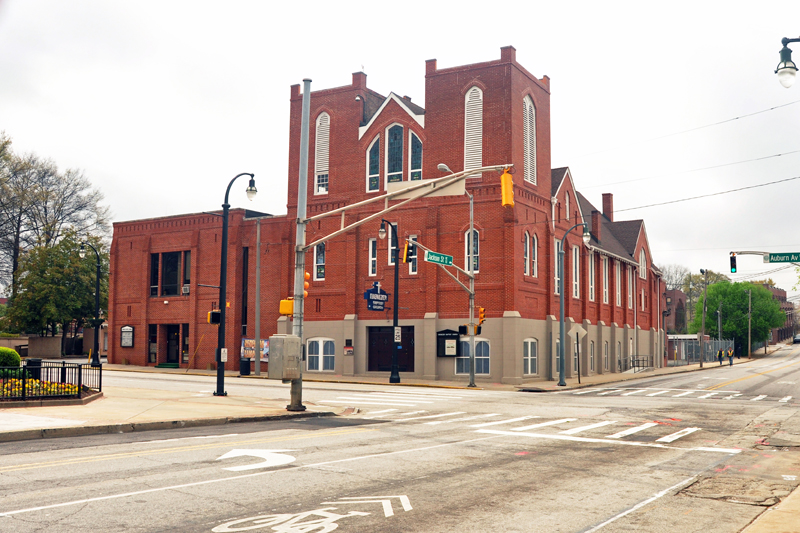
Ebenezer Baptist Church in Atlanta where Martin Luther King, Jr and his father were ministers

Coca Cola Polar Bear ready for kids to shake his paw (At the World of Coca Cola in Atlanta)

One of a pair of Sandhill Cranes that walked by our RV every day in the Bushnell, Florida Escapees RV Park.  They are 3 ft tall & their common call is a trumpeting, rattling gar-oo-oo that is audible for more than a mile.

Ibis near the Bushnell campsite

Car in front of us that claims to run on water - seen in Bradenton, Florida

Vehicle seen in the First United Methodist Church parking lot in Tarpon Springs, Florida - obviously a take-off from the 'Ghostbusters' movie made in 1984


Thursday, December 9, 2010

Wrapping Up our 2010 Travels

Rainbow Bridge National Monument (Utah)

As winter sets in, we are now safely settled in our winter resting spot in Green Caye RV Park in Dickinson, TX. This is the place that we stay in every year – very quiet and close to our doctors, friends and close to where we lived for 37 years. We are happy to report that the gremlins that dogged us from Vancouver Island thru Oregon earlier in the year have not made their presence known again.


In our last update, we were in southwestern Utah in St. George. From there, we drove in a rented car over some very “lonely” roads to the very remote Great Basin National Park in northeastern Nevada. On the way we drove thru the always beautiful Zion national Park and stopped by Cedar Breaks National Monument (one of our favorite smaller parks) where it had just snowed some overnight. In Great Basin, we drove up the Wheeler Peak scenic drive to view the recently snow covered peak and the next morning we took the tour thru the Lehman Caves (a cave packed with cave “decorations” formations).

After returning to St. George we started meandering thru the southwest heading for Texas. Here are some of the highlights:

  1. Grand Canyon National Park North Rim – We visited here after October 15th when the park “closes” for the winter. It still remains open until the first big snowfall comes (usually around the end of November). During this “shoulder period”, the visitor center/gift shop is open and the campground is open (but without water). The Grand Lodge, rental cabins, campground store, filling station etc. are closed. The views from the North Rim are truly fantastic. From here you are about 1,000 ft higher than on the South Rim and get to look down into the canyon more. The North Rim is really remote (it is 220 miles of driving to get from the South Rim to the North Rim – which as the crow flies is only 12 miles away). But, if ever have a chance to get there, we would highly recommend it. While in the campground, we enjoyed watching a Kaibab squirrel (which is only found in the North Rim area) take pine cones from the top of trees and then scamper to where it had his stash for the winter.  We were planning on staying longer, but with cold weather in the forecast, we moved on.. Even then, it snowed on us as we were leaving.
  2. Lake Powell and Rainbow Bridge – Included in the Glen Canyon National Recreation Area on the Arizona/Utah border is Lake Powell lined with great rock formations. While camping there for 4 nights, we took a tour into the Glen Canyon dam to see the hydroelectric turbines (security was very tight and it seemed that we were rushed thru the tour). On another day, we had a choice of a 100 mile round trip boat ride or go on a 35 mile round trip hike to get to the Rainbow Bridge National Monument – (we, of course, chose the boat ride which was quite scenic). Rainbow Bridge is the world’s largest natural bridge and is almost as tall as the Statue of Liberty and this is the 100th year that it has been protected as a National Monument. What a truly awe inspiring sight to see.
  3. Monument Valley (A Navajo Tribal Park) – This place really lived up to its billing – what a beautiful place. The best part of our visit was that the view from our campsite was fantastic (our campsite is in one of the photos included below). We didn’t have any amenities (like electricity), but for the fee of $10 a night – what a deal! And we got a bonus in watching the sunrise the next morning.
  4. Goosenecks State Park - This is where the San Juan River in southeastern Utah has cut a 1000 ft deep canyon thru the desert in what is known as an “entrenched meander”. Over a distance of 1 ½ miles, the river flows over 6 miles thru the canyon. (See panoramic picture below).
  5. Canyon de Chelly National Monument– This is our 2nd visit here and was as beautiful as before. The last time we had looked down into the canyons from numerous viewpoints and hiked down to see one of the ancient homes in the canyon walls. This time we chose to take a ride with a Navajo guide thru the bottom of some of the canyons over sand and streambeds. What a ride and the canyons are beautiful! 
  6. Bent’s Old Fort National Historic Site in southeastern Colorado – A fur trading post built in 1833 that was the only white settlement on the Santa Fe Trail between Missouri and Santa Fe and was on the border between the US and Mexico Looks like this might be a possible place for us to volunteer some summer or fall in the future. 
  7. Sand Creek Massacre National Historic Site (one of the newest National Park sites [2007]) – This is where native Americans (mostly women and children) in 1864 were massacred by a Colorado Territorial volunteer regiment in southeastern Colorado. This is one of the many sad events that occurred when the European settler way of life conflicted with that of the native Americans.
Then it was time for us to leave the National Park sites and take time to visit with family. After a week visiting with our daughter’s family (including 4 grandkids) in North Texas, we headed to Austin for a few days over Thanksgiving spending some time with Cathy’s brother and sister (and also a time to remember her other brother David that died this year).

Another milestone has been reached: With this trip, we have completed visits to ALL of the 173 National Park Service sites that are in the western continental United States (west of Memphis, TN)). In addition, we have visited some of the parks in Alaska and in the Midwest (for a total of 224 out a possible 392). So, we guess it is about time to start focusing on the eastern states now.

Plans: Spend Christmas in the Denver area with our son and daughter in law and visit Jan’s 2 brothers there. After a couple of months here in the Houston area we will spend a couple of weeks in Livingston (our official address) at the Escapees Rainbow End RV Park and then a couple of weeks again with our daughter’s family in north Texas. Then in early March we plan to head to the east coast of the US and visit the Canadian Maritimes (concentrating on New Brunswick & Prince Edward Island provinces).

Hope this update finds you all doing well and we wish you a joyful and meaningful Christmas season and a Happy New Year.

White House Ruins - Canyon de Chelly National Monument (Arizona)

Pronghorn Antelope - Nevada

Zion National Park (Utah)  - View near main entrance

Cedar Breaks Nationl Monument (Utah) - Recent snowfall

Parachute Shield - The most famous formation in Lehman Caves in Great Basin National Park (Nevada)

Barb Wire and Bob Wire - Along roadside near Great Basin National Park

One of the climbs on the Rings Trail in Mojave Preserve (California)

Castle Rock on Powell Lake in Glen Canyon National Recreation Area (Utah) - On way to Rainbow Bridge National Monument

Cadillac Ranch west of Amarillo, TX - Current tradition seems to be to spray paint on the cars and then leave the paint cans

Unusual clouds over The Grand Canyon

Imperial Point - North Rim of Grand Canyon National Park

Kaibab squirrel on way to its winter stash with a pine cone

Our campsite view in Monument Valley Tribal Park (Arizona)

West and East Mittens in Monument Valley just before sunset

The San Juan River Goosenecks (Utah) - This is 3 separate photos merged together to form the panorama

Thursday, October 21, 2010

Passed 600 Lighthouses Target

Big Sur Coastline (with Bixby bridge in the distance)

In our last update, we were leaving Lassen National Park in northeastern CA and the gremlins had been following us with a vengeance. We are now happy to say that we think that the gremlins have ‘jumped our ship’ since we have been trouble free with our truck & 5th wheel for the last 5 weeks. Yeah! To make sure they stay away, we had the truck fuel tank replaced in Sacramento (the aluminum inside coating in the tank had delaminated causing silver flakes to be in the fuel lines) and Jan replaced the last original 5th wheel independent suspension axle with a new one (so we now have all upgraded axles).

We think that maybe the gremlins jumped over to rental cars in that we had problems with 2 of them. We exchanged one on Sacramento when the dash indicator lights acted up, the remote would not work, and the interior lights stayed on after closing the doors. In the LA area, on another car rental the low tire pressure indicator came on & we had to add air at service stations a few times. When we turned the car in, we noticed that there was a note on the key that said ‘flat tire’. So, it appears that they just added air before we got the car (instead of fixing the flat).

Since our last update we have been covering a lot of territory in California, seeing lighthouses, seeing National Park Service sites, and visiting with many relatives – from northern California down to San Diego. In order to do this, we depended heavily on rental cars to get us around with ease on the numerous freeways and the hundreds of miles that we traveled down highway 1 along the coast. On highway 1 we don’t know how many thousands of curves that we went around, but we were sure glad that we did not try to drive it with our RV.

Here are some of the highlights of the last 5 weeks:

We reached another milestone as we passed the total of 600 lighthouses that we have photographed (actual number is 612). On this trip we added 20 ‘new’ lighthouses seen in California to our list plus we saw some previously seen lighthouses as well. Some of the special ones seen were:
  • Point Sur lighthouse (in the Big Sur area) sits on top of a 350 ft tall rock. In order to visit it, we had to walk up a path to the top of the rock. It was worth the hike.
  • Vicente Point lighthouse (in the LA area) is open only on the 2nd Saturday of each month & we happened to be there at the right time in order to climb to the top.
  • Yerba Buena lighthouse in San Francisco is on an island that is in the middle of the Bay Bridge which goes from Oakland to San Francisco. In order to see the lighthouse, we passed it on a round trip ferry ride from Oakland to San Francisco and back. (See photo below)
We drove to 13 different locations throughout the state to visit with 10 cousins, 3 grown children of these cousins, & 3 aunts. We enjoyed re-connecting with these folks and catching up on what is happening in each of their lives. We had planned on visiting with some other friends and relatives, but our time was limited and we can endure only so much freeway traffic. Maybe next time we can catch up with some of the ‘missed’ folks.

We visited the following 4 National Park Service sites:
  • The Pinnacles National Monument (a great rock climbing place about 125 miles SSE of San Francisco). We just happened to campout in the campground there when the temperature hit 110 degrees (in what was called a ‘temperature explosion) – this was the same day that it reached 113 degrees in LA. At least the temp dropped into the low 60’s at night. Now we know why there is a swimming pool in the campground at this National Monument.
  • Santa Monica Mountains National Recreation Area (of course in the Santa Monica Mountains north of LA.)
  • Channel Islands National Park (which consists of 5 islands off the coast between Santa Barbara and LA). We went on a boat trip out to one of the islands (Anacapa) and saw the lighthouse on the island, plenty of birds (including the brown pelican), porpoise, sea lions and harbor seals.
  • Joshua Tree National Park in southeastern California is an area set aside to protect the unusual Joshua Tree. This park contains part of 2 deserts the Mojave desert & the California Colorado desert (which is part of the larger Sonoran desert). We really enjoyed the drive thru this desert park – probably more so because of the openness and lack of people/freeways etc. that we had left behind. Not only were there lots of Joshua trees, but also other desert plants, rock formations, and 2 refreshing oasis.
We noticed that the Hearst Castle was close to the Piedras Blancas lighthouse and decided to take a tour. What a beautiful place to visit and see what excessive money could buy back in the 20’s & 30’s. If you are out in this area, we would highly recommend that you take part of a day and visit this place.

In searching out lighthouses, we were blessed in ‘having to’ travel along countless miles of the beautiful California coastline. Many of the lighthouses were in great coastal locations and the Big Sur coastline was especially beautiful.

We enjoyed great weather (except the very hot day in The Pinnacles). After leaving there, we drove to the coast (Monterey) and the temperature plummeted down into the upper 60’s for a high. Most of the days were nice and clear with intermittent fog along the coast some of the days.

We are now in St. George – southwestern Utah. As the aspen leaves turn to a beautiful yellow & snow is falling in the higher elevations, it is a signal that winter is coming and it is time for us to start heading to Texas until we resume our wanderings next year. We hope to be back in Texas by November 15th. In our next update, we will report on our Mojave National Preserve, Great Basin National Park, Grand Canyon North Rim, Rainbow Bridge National Monument, & Monument Valley planned visits.

Hope this update finds you all doing well.

Great Blue Heron in the reeds of Famosa Slough in San Diego

Point Cabrillo Lighthouse (close to Mendocino, CA)

Point Fermin Lighthouse (In San Pedro, CA)

Pigeon Point Lighthouse (close to Pesadero, CA)

Yerba Buena Lighthouse (between San Francisco & Oakland)

Hearst Castle outside swimming pool

Hearst Castle inside swimming pool

Black tailed deer in Pinnacles National Monument

A Joshua Tree in Joshua Tree National Park

Cholla Cactus in Joshua Tree National Park

Cottonwood Springs Oasis in Joshua Tree National Park

Coastline near Ft. Bragg, CA

Common porpoise following our Channel Islands boat trip

Sunset at Pinnacles National Monument

Followers