Sunday, August 28, 2011

Traveling along the Gaspe Peninusla, New Brunswick, & PEI Coastlines

Landing gear down and wings deployed for a landing in the Northern Gannet colony on Bonaventure Island along the Gaspe Peninsula in Quebec, Canada

What a whirlwind of activity it has been during the last 6 weeks.  We have traveled around the Gaspe Peninsula in Quebec, the northern coastline of New Brunswick and around the coastline of Prince Edward Island in search of and finding more than 110 lighthouses and enjoying many other activities.  Here is a summary of our travels:
  • The Gaspe Peninsula (part of Quebec Province) follows the eastern shore of the St. Lawrence River and wraps around where the river expands and becomes the Gulf of St. Lawrence).  The road around the peninsula follows the beautiful coastline and we saw some really great lighthouses.  The road gets more hilly as you round the top of the peninsula and becomes pretty steep in places (many hills were 12 to 14 % grade and one long hill was 17% grade).  The Appalachian Mountains continue into Canada and end at the northeastern corner of the Gaspe Peninsula at Cap Gaspe.  The International Appalachian Trail starts/ends here (and there also just happens to be a lighthouse there).   Cap Gaspe is also in Forillion (pronounced ‘for-ee-yaw’) National Park – one of the most beautiful Canadian parks.
  • After staying in a beautiful campground in  Forillion,  we traveled a short distance down the eastern part of the peninsula to Perce.  Just offshore is a famous rock formation (Perce Rock) and Bonaventure Island.  We took a boat ride out to the island and then hiked to the far side where we experienced the highlight of our last few weeks.  It was here that we were able to watch Northern Gannets up close in the largest Gannet colony in the world (estimated to be 150,000 birds) – what a great ‘racket’ they made.  When we visited New Zealand in 2008, we were enthralled watching the Australasian Gannets there and we had just as an enjoyable time watching the Northern Gannets take off, fly, land, and sleep.  These very large birds (only the Albatross is larger) lay one egg and one parent always stays with the egg (or hatched chick), while the other one goes out fishing for food.  It is quite some site to watch the mutual fencing ritual that the pair does when the parent that was out fishing returns. 
  • After completing our loop around the peninsula, we followed the northern coastline of New Brunswick in search of lighthouses and we were well rewarded in finding all of them – some required going down some rough roads and some hikes to reach them.  We also camped and hiked in Kouchibouguac  National Park (pronounced ‘KOOSH-e-boo-gwack’).  While traveling in this province we saw lobster boxes, mailboxes, telephone poles, and some houses painted in blue (with yellow stars), white, & red – the colors of the Acadian flag.  It was here in New Brunswick in one dark period in history that the French Acadian people were forced from their lands and deported to France with some eventually ending up in Louisiana - The Cajuns. 
  • We ended up our stay in New Brunswick camping at Cape Tormentine near the start of the Confederation Bridge.  This 8 mile long bridge was completed in 1997 and replaced the ferry that docked in Cape Tormentine.  Today, you can reach the west part of the PEI by the Confederation Bridge or the east part of the PEI by ferry out of Nova Scotia.  You pay only when you leave the Island (either by ferry or by bridge).
Our most distant destination this year was PEI and it seems that we saved the best till last.   This is truly a special island and we have thoroughly enjoyed our stay here.   The Island is small enough that you can ‘get your hands around it’ and feel at home.  Here are some highlights of our PEI visit.
  • With our reaching PEI we have now reached one of our long term goals of visiting all 10 provinces in Canada in an RV (British Columbia, Alberta, Saskatchewan, Manitoba, Ontario, Quebec, New Brunswick, Nova Scotia, Newfoundland/Labrador, and PEI.  In addition we have visited 2 of the 3 northern territories (Yukon & Northwest Territories).  The only remaining territory is the new one that was created in 1999 – Nunavut – which was split off from the Northwest Territories.  Since this remote territory can only be reached by boat or by plane, we have absolutely no plans to take our RV there.  Technically, we have been in Nunavut when we waded in Hudson Bay in Manitoba, since the Nunavut boundary runs right along the coastline there.  Maybe in the far future we might fly to Iqaluit (the capital) just to see what it is like.
  • You really get that small community feeling wherever you go.  Even the ‘big’ town of Charlottetown only has a population of 33,000 and the Charlottetown ‘metropolitan area’ population is only 60,000.  You can drive the 163 miles from the farthest NW point (North Cape) to the farthest east point (East Point) in about 3 1/2 hours. 
  • The Island has 61 remaining lighthouses and we managed to photograph 59 of them (of the two we missed - one is on an island and cannot be seen from shore & the other is on private property that you can’t get to). 
  • The dirt on the island is red (caused by the high iron content) and the soft cliffs (which erode easily) along the coastline are red.  Unpaved roads are red and we went down numerous ‘red dirt roads’ in search of lighthouses.
  • This is Celtic country and there are nightly ceilidhs (pronounced kay-lees) that you can attend (most for a nominal cost of $10) where you can enjoy fiddle, guitar, accordion, & piano playing, plus singing, step dancing, and storytelling.  The tradition is to enjoy ice cream & strawberries at intermission time.  We enjoyed these so much that we attended many of them.
  • One of the really big attractions here is Anne of Green Gables.  L. M. Montgomery grew up in the Cavendish, PEI area and wrote a series of books – the first one being Anne of Green Gables published in 1908 (which is a story about a young orphan red-headed girl with a great imagination that grew up on a farm named Green Gables in PEI).  Here on PEI you find historic sites, museums, restaurants, a musical with the Anne theme and of course countless souvenirs (especially Anne dolls that seem to be everywhere).  Many Japanese tourists come here to visit PEI  since Anne of Green Gables was included in their school curriculum after the 2nd WW.
  • Farming is the main business on the island.  The big farm crop is potatoes and they even have a Potato Museum which shows all of the varieties grown here.  It seems that some of the best French fries in the world come from PEI potatoes.  Of course, they rotate their crops and can only grow potatoes once every 3 years on the same land.
  • Fishing is also big business and one of the ‘must do’ things here is to go to one of the Lobster Suppers where appetizers, mussels, and desserts are included.  We went to 2 of these, but only Cathy had the lobster and mussels.
  • Another twist to the unusual weather this year.  All the local people here complain about how wet and cold it has been here this summer.  Usually, they have sunny and warm days with a day or 2 mixed in with showers.  This year, it has been many days with showers with a nice day here or there.  Fortunately, we arrived at the right time and have seen more nice days than wet ones and the temperatures have been great for us (with highs mostly in the 60’s and low 70’s).
  • One of the ‘must do’ things here is to take the Cows Creamery Factory tour and of course have some of their really super ice cream.  In addition, their whimsical T-shirts (which are printed here in the Creamery) are a big hit.  Some of the T-shirt slogans are/have been: ‘Dancing with the Steers’, ‘Cowy Potter’, ‘Dr. Moolittle’, ‘The Amoozing Race’, and ‘The Little Moomaid’.  They bring out 12 new T-shirt designs each year.
  • PEI has 1 National Park along the north central coastline and with the very original name of PEI National Park.  We camped here one night, walked along the beach, & took photos of some of the birds.
  • Charlottetown is known as the birthplace of Canada.  It was here that the first gathering was held in 1864 which led to the Canadian Confederation in 1867 and which has evolved into Canada as we know it today.  Charlottetown is also the capital of PEI.   In our continuing quest to visit all of the provincial & territorial capitals in Canada, we visited Province House where the legislature meets.
Well, our time here on PEI is coming to a close.  We had planned to leave today, but are waiting 2 extra days until the remnant of hurricane Irene passes by (it is forecast that we should only get about an inch of rain and winds about 40-50 MPH).   Our plans have us crossing the Confederation Bridge and then finding lighthouses along the eastern and southern coastline of New Brunswick (including taking a ferry out to Grand Manan Island) before wandering inland down to Florida for a New Horizon RV rally at the end of October.  Then we will head back to the Texas area for the winter months.
Hope this finds you all well.

La Martre Lighthouse on Gaspe Peninsula

Haut Fond Prince Lighthouse in the St. Lawrence River

Ile Verte Lighthouse near Riviere-du-Loup, Quebec

Point-au-Pere Lighthouse on the Gaspe Peninsula

Pot a'L'Eau-de-vie (Brandy Pot) Lighthouse near Riviere-du-Loup, Quebec

Pointe a la Renommee Lightstation on Gaspe Peninsula - Marconi installed the first maritime radio station in North America here in 1904.

A small White Satin Moth (Leucoma Salisis) with neat black and white legs in the grass at the base of the Cap Des Rosiers Lighthouse

Coastline at Bon Ami Viewpoint in Forillion National Park

A Red Fox near Cap Gaspe in Forillion National Park

View from our campsite of the Perce Rock at sunrise

I know I can fly - Just let me try (Northern Gannet)

Nesting gannets as far as you see

A Northern Gannet parent and chick taking a nap amidst all the chatter in the colony

Point Escuminac Lighthouse on northern shore of New Brunswick

Port Borden Range Rear Lighthouse with the Confederation Bridge in the backgound

Sometimes small is beautiful - This is Howard's Cove Lighthouse on a hill overlooking the harbour on PEI

New London Lighthouse on PEI

Wednesday, July 13, 2011

Up to Riviere-du-Loup on the St. Lawrence River

       Crown Point Lighthouse on Lake Champlain – A memorial to the French Explorer Samuel Champlain.  Side note:  This lighthouse/memorial has a sculpture by world famous A. Rodin on display out in the open in a public campground (instead of being in a museum under lock and key).


We are now taking a break in our travels along the St. Lawrence River in the Canadian Province of Quebec.  We are definitely in French speaking country where most of the people speak French with some speaking bilingually with basic English.  It makes shopping interesting with the use of hand language and pointing to things.  Quebec province requires that children with French parents go to French school with only 1 hour of English required per week.    The road signs are only in French, but we can figure out most of them.  We do appreciate those people who try to communicate to us in English.  We wish that more emphasis had been placed on our taking foreign languages when we were going to school.
We have had a really great last 2 months in continuing our quest of National Park Service Sites, seeing lighthouses, and a week flying back to Texas for our eldest grandson’s high school graduation.  We have had a couple of problems (but nothing that has slowed us down).  The main one was to replace the brake actuator for our trailer hydraulic brakes in New Jersey.  The company that had made ours went bankrupt and so we had to have one made by a different company shipped to us.  I installed it and it worked the first time!
Here are some of the highlights of our travels:
  • We started by crossing over the Chesapeake Bay Bridge/Tunnel.  This 20 mile long complex consists mainly of long causeway-like bridges and 2 tunnels under the shipping lanes (note:  The toll was $28 for our truck and fifth wheel). 
  • We then traveled along the Virginia, Maryland, and Delaware coastlines on the Atlantic Ocean and Delaware Bay seeing numerous lighthouses.  We then crossed into New Jersey where we stopped at a campground which served as our base for our trip to Texas and then sightseeing in the Philadelphia and New Jersey areas.
  • Our trip back to Texas got off to a slow start when our flight out of Philadelphia was delayed for about 4 1/2 hours.  This was the day after a big hail storm hit DFW airport and over 80 planes had to be inspected before they could fly.  Since DFW is an American Airlines hub and our flight was with American, many flights were delayed or cancelled.  After we got under way, the rest of our trip was great - going to the graduation, great visits with family and friends, and the flight back went without a problem.
  • Once back in New Jersey, we rented a car and traveled all the way around the coastline of New Jersey seeing almost all of the lighthouses there.  The ones we skipped are in the middle of Delaware Bay and require a special lighthouse boat tour to see these (something that we have added to our bucket list for in the future).  Our path took us to Cape May (the most SE part of New Jersey), Atlantic City, and Sandy Hook (the most NE corner of NJ – where we could see New York City across the bay).  On the way back to our campsite, we visited Thomas Edison’s National Historic Park which included his laboratory and Glenmont home in West Orange.
  • On another day, we drove into Philadelphia area to take photos of a couple of lighthouses (on the Schuylkill and Delaware rivers), visit Edgar Allen Poe’s home, and visit Valley Forge.  School kids did not get out for the summer here until the end of June and multiple busloads of noisy kids must have had an outing the day we went to Valley Forge.  This was not one our most peaceful and enjoyable park visits.
  • On another trip, we rode the train into Philadelphia and visited the Independence National Historical Park where we saw the Liberty Bell, toured Independence Hall, and Congress Hall (where the Congress met thru the 1790’s), went by the Betsy Ross house, and visited multiple Ben Franklin sites (including the first Fire Department and Post Office stated by him).  Quite a popular place with waiting lines etc.
  • After traveling close to New York City on our big New Jersey loop, we decided to take a more westerly course and see the SE part of Pennsylvania.  While there, we saw the beautiful Delaware Gap Scenic River, Hopewell Furnace Historic Site (where they made iron stoves in the forge there in the 1800’s), and Steamtown Historic Site (which of course was all about trains – steam engines, a large turntable, and cabooses).
  • Then it was up thru New York state on our way to Canada.  Along the way, we visited the Vanderbilt mansion, FDR’s Springwood home, the FDR Presidential Library and museum (the first of its kind), and Eleanor Roosevelt’s Val-Kill retreat home in Hyde Park, NY.  Note: This is Dutch country up here and you see a lot of ‘kills’ – which is the Dutch word for a body of water (literal translation is riverbed).
  • We then stopped at Saratoga where the turning point battle of the Revolutionary War was fought.  It was here that the British-led forces surrendered for the first time in British history (the only other two times were at Yorktown, Maryland at the end of the Revolutionary war, and in the Battle of Singapore in WWII).
  • Then it was on up the Hudson River to Lake Champlain.  Along the way we took photos of 4 lighthouses along the Hudson River.  We then rented a car and drove around Lake Champlain taking photos of the lighthouses there.  This lake played an important part in shipping and trade since you could sail from New York to Montreal by going up the Hudson River, thru a canal, across Lake Champlain, thru another canal, and then down the Richelieu River to the St. Lawrence.  Special note: In 1998, in Senate bill 927, Lake Champlain was named one of the Great Lakes – so to the geography buffs out there, there are now 6 Great Lakes.
  • Then it was time to cross over into Canada.  We crossed at a small crossing (not one of the main ones) and we didn’t zip thru this time - our truck and fifth wheel were searched – but, as expected, they found nothing.  We stayed in the Montreal area where we again rented a car and drove up and down the St. Lawrence River from about 40 miles SW of Montreal up thru Montreal and then to Quebec City – of course taking photos of lighthouses.
  • Then it was on to Levis, QC where we visited the Levis Forts National Historic site.  The place was almost deserted and we had a very peaceful visit.  Just 2 days before, this place had been packed with people when Will and Kate dropped by for a visit.  It might have been fun to be there, but parking really would have been a problem for us since the fort is in a residential area with no street parking.
  • Finally, we made it to Riviere-du-Loup where we are camping for a week.  It might be hard for a lot of you to imagine cool weather, but the highs lately here have been in the upper 60’s to low 70’s.  Hope you are not suffering too much from this year’s intense heat.
  • Along the way, we enjoyed great visits with friends in New Jersey, New York state, and Vermont.  Cathy even got to go to the Vermont Quilt Festival (the largest in the northeast).  Trivial note:  Diesel fuel cost the equivalent of $5.19 per gallon this week.
In summary, in the last 2 months, we have sailed past the 700 lighthouse mark and added over 75 for a total of 740.  In addition, we visited 6 National Wildlife Refuges, and 17 National Park Service Sites.  We think that it is about time to slow down a bit since we have reached cooler weather, and so our pace thru the rest of Quebec, New Brunswick, Prince Edward Island, and then back to Texas in November (via Florida) will not be quite as hectic.
Hope you all are doing well.
             'Red Spotted Purple' Butterfly seen in Delaware Gap Scenic River area
 Dingmans Falls in Delaware Water Gap Scenic River Recreation Area
         Wild  horses roaming near our campsite in Assateague National Seashore Park.  Earlier, they had come thru our campsite.
Washington's Headquarters in Valley Forge
             Isle La Motte Lighthouse on Lake Champlain
   Roebling Aqueduct over Upper Delaware River - This used to be a canal filled with water and operated from 1828 to 1898 - now it is a vehicle bridge.
   Delaware Breakwater Lighthouse  - off the coast of Lewes, DE
          Twin Lights (Navesink) Lighthouse - Two lights in one building - Located in New Jersey near New York City - used 2 lights so it could be distinguished from other lighthouses in the area.
Liberty Bell in Philadelphia
                  Sandy Hook lighhouse - The oldest lighthouse that is still standing in the United States - Put in service in 1764 - Located n New Jersey near entrance to New York City.
 Roundout Creek Lighthouse - On Hudson River at Kingston, NY
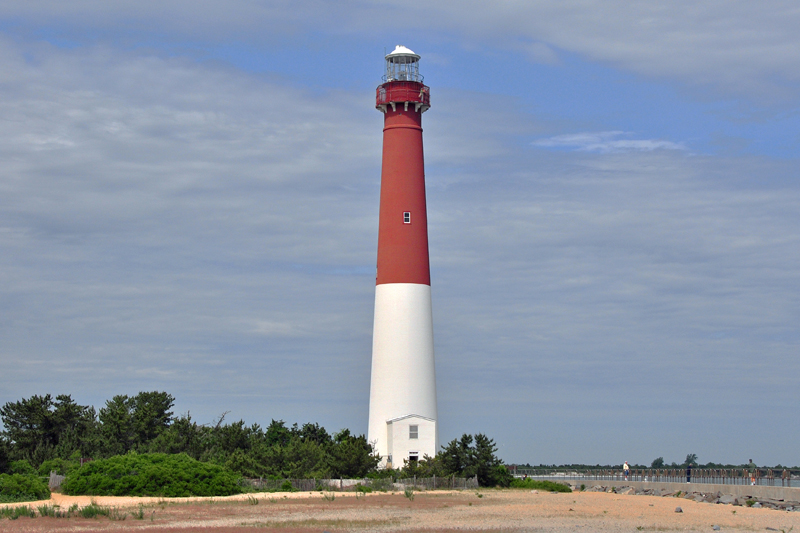
    Barnegat Lighthouse on Long Beach Island in New Jersey
     Killdeer in Fenwick Island, DE
Lindenwald - Martin Van Buren's Home in Kinderhook, NY.  He was the 8th President of the US.
   Solanges Canal Lower Entrance Rear Range Light - Used to guide ships into the canal - Near Montreal
        Sainte Anne de Sorel Front Range Light - On the St. Lawrence River between Montreal and the City of Quebec

Tuesday, May 17, 2011

Florida Keys Thru North Carolina's Outer Banks


Cape Florida Lighthouse (near Miami)
The last month has been a whirlwind of activity as we visited the 4 great National Parks in South Florida and then meandered up the coastlines of Florida, Georgia, South Carolina, & North Carolina.  Here are some of the highlights & notes on our travels this month:
  • We visited 12 new (to us) National Park Service sites including the Everglades, Big Cypress, Fort Sumter, Cape Lookout, Cape Hatteras, & The Wright Brothers Memorial near Kitty Hawk.  In addition, we revisited 7 sites to get new passport stamps and see some things missed on our visits there 5 years ago.  This brings our grand total to 244 out of a possible 395 National Park Service Sites.  The best part of visiting these places is that we are learning so much and almost overloaded with all of the information that we receive.  At most of the sites, they have a great video on the history of the site and/or the geology and wildlife of the area.  We make it a point to watch the video, see the exhibits, and take a trail or listen to a ranger presentation.
  • We photographed an additional 37 lighthouses (some truly great ones) and were able to climb 10 of these to the top.  This brings our grand total to 658.
  • We discovered that there are many more islands than we thought along the southeastern coastline and how important the barrier islands and the Atlantic Intercoastal Waterway are to this area.
  • Our fuel mileage has greatly improved since the roads close to the coast are all flat – with bridges and overpasses being the only thing that get us elevated.
  • The most outstanding event was our trip out to Dry Tortugas National Park.  This Park is 68 miles west of Key West on Garden Key where the very large Fort Jefferson was built.  Fort Jefferson was built to protect the Gulf of Mexico area.  The weather was great, the boat ride was smooth, the water was beautiful, there were numerous birds to see, and the fort tour was very interesting.  This is an all day trip and was for us on the expensive side ($150 each, with breakfast & lunch included).  But with reaching another National Park & seeing 3 lighthouses, it was more than worth it to us.
  • On the drive out and back to Key West, we took photos of the reef lighthouses (photo of one is included at the end).  Ships follow the Gulf Stream which flows north close to the Florida Keys.  When sailing south, ships try to thread the needle between the keys and the Gulf Stream.  Submerged dangerous reefs extend out from the keys & numerous ships have met their demise on these hidden reefs.  To aid the mariners, lighthouses were built offshore on reefs  along the keys.  By the way, “keys” are islands created by exposed portions of giant coral reefs.
  • With the rest of the country suffering from tornadoes, rains, floods, drought etc., we feel blessed to have enjoyed exceptional weather.  Our only minor complaint might be the unseasonably warm weather in Florida.
  • Traveling in the east as opposed to some of the western states has presented more challenges with greater populations leading to heavier traffic.   We have, however, been able to find a few isolated roads that we can travel at a slower pace.
  • We really enjoyed the outer banks in North Carolina.  You can drive along this almost 100 miles of barrier islands and take 2 ferries where there are no bridges.  In addition to the beautiful islands, there are some truly great lighthouses – with the Cape Hatteras one being the most famous.   
  • In order to get to some of the islands to see lighthouses, we took passenger ferries and sometimes our 5th wheel on vehicle ferries.  In all, we managed to ride on 13 different boats.  The North Carolina ferries are really great and the fares are very cheap (the ferry from Cedar Island to Ocracoke Island with our RV was over 2 hours sailing time and cost only $45 and the other ferry was free).
  • We did have a couple of small glitches this month.  Jan’s glasses frames broke, but with a spare pair on board this was not a big deal.  The other glitch was that the alternator light came on in the truck.   We made it to the campground we were headed for & the next morning drove into town and had it replaced (and we didn’t have to do any re-planning).  So, we do not consider these minor problems as an indicator that the gremlins have come back onboard.
  • We have complicated and added to our travel itineraries recently.  Since we are becoming more interested in photographing birds, we have started visiting National Wildlife Refuges and collecting passport stamps and patches.  Now we will not only have to ensure that we do not miss seeing a lighthouse or a National Park Service Site, but will have to keep track of the more than 500 refuges that we have not visited yet.
We are now on the eastern coast of Virginia at Cape Henry and can see Cheasapeake Bay.  We plan to cross the Bay on the long bridge/tunnel combination & then go up the coastline of Virginia, Maryland, & Delaware until we reach Philadelphia.  There we will fly back to Texas for a visit with family & to see our eldest grandchild graduate from High School.  Then we will continue North to Quebec & eventually to Prince Edward Island.
Hope you all are doing well.
Brown Pelican taking off over shallow water at Dry Tortugas National Park
Cape Lookout Lighthouse (one of our favorites) - In Cape Lookout National Seashore - North Carolina
Dragonfly in Big Cypress Preserve - Florida
Sapelo Island Lighthouse - Georgia
Florida Red-bellied Turtle - In Everglades National Park
Lighthouse on Fort Jefferson - Dry Tortugas National Park
Smiling alligator on Sapelo Island - Georgia
Osprey on her nest - Near Hilton Head, South Carolina
 
St. Simons Island Lighthouse - Georgia
Lesser Yellowlegs feeding near Bodie Island Lighthouse - North Carolina
Carysfort Reef Lighthouse.  This photo was taken standing in high tide water in an inlet thru the trees to get this lighthouse 5 1/2 miles away with a telephoto lens.  The lightkeepers lived in the lower part of the lighthouse which was 30 feet above the waves.  How would you like to be there during a hurricane?
Reflection in a swamp at Moores Creek National Battlefield - North Carolina
Cape Hatteras Lighthouse - In Cape Hatteras National Seashore - North Carolina.  Can you believe that this lighthouse was moved a 1/2 mile away from the shore in 1999?  It was slid over rails covered with ivory soap.
Soaring Wood Stork in Everglades National Park
Bodie Island Lighthouse - In Cape Hatteras National Seashore - North Carolina
Sullivan's Island Lighthouse - near Ft. Sumter in South Carolina.  This lighthouse is triangular and even has an elevator to the top.

Sunday, April 17, 2011

On The Road Again in 2011

White Pelicans with a couple of black Cormorants.  Looks like one of the pelicans is trying to catch a fly ball.

We spent the winter months in the Texas area mostly in the Houston/Galveston area – with a trip (in a rental car) to the Denver area over Christmas to be with relatives. Then in late February, we traveled to McKinney, TX (north of Dallas) to spend some time with our daughter and grandkids. On March 8th, we packed up and set out on our 2011 exploring trip heading to Florida, the eastern coastline of the USA up thru Delaware & then to Canada for the summer (ending up at our final destination of Prince Edward Island in August).

We have had a great first month on the road with no mechanical problems, good weather most of the time (although it has been quite warm), and have been able to follow our planned travels pretty closely. The only problem has been the recent frustration in tracking the almost - but did not happen government shutdown. We had made plans to see 8 visitor centers in the 4 National Parks in south Florida (including an all day boat trip out of Key West to Dry Tortugas National Park) and could almost see those plans go up in smoke. Fortunately, level heads prevailed & we have moved on.

After leaving Texas, we headed to Alabama to visit with some friends (camping next to their house) and to visit relatives. Along the way, we re-lived some of the Civil Rights events by crossing the Edmund Pettus bridge in Selma (where on March 7th 1965 the 1st march to Montgomery was stopped on “Bloody Sunday” & then the successful 5 day march started on March 21st). We also visited the Lowndes County Museum (halfway between Selma & Montgomery) & the Rosa Parks museum in Montgomery. What a moving experience this was for us (to re-live what the conditions of black Americans were back in the 60’s, the progress that has been made, & how much there still is to do).

While in Alabama, we of course visited the National Park Service sites - Horseshoe Bend National Military Park, Little River Canyon Preserve, & Russell Cave National Historic Site, took photos of 2 small lighthouses in the Huntsville area, and camped in the great Cheaha State Park (the highest point in Alabama at 2,405 ft). The drive up to and back down out of Cheaha State park was quite interesting with numerous sharp curves and a couple of steep grades.

We then crossed over into Tennessee to Chattanooga, camped out next to a friend’s house, and drove to the top of Lookout Mountain to Point Park (part of the Chickamauga & Chattanooga National Military Park). Our friends then showed took us around to many great places we probably would not have gone to - visiting the outstanding Tennessee Aquarium, seeing the Chattanooga Choo Choo, riding the carousel (Cathy on an ostrich & Jan on a horse), and seeing the historic Delta Queen sternwheel steamboat.

While staying in Chattanooga, we rented a car & took a trip to Atlanta to see the Keenesaw National Battlefield, the Chatahoochee National Recreation Area, and the Martin Luther King, Jr National Historic Site. In addition, we visited the Jimmy Carter Presidential Center (with its beautifully landscaped grounds) and the Atlanta History Center.

Then it was time to head down to Florida to start our tour around the coastline (leaving the panhandle area for later). We started in northern Florida by taking a short boat ride out of Cedar Key to see the lighthouse on Seahorse Key. We then spent some time in the 2 Florida Escapees Parks (associated with the RV Club we are members of) and saw 6 more lighthouses in the Tampa/St. Petersburg, & Fort Myers areas along the west coast. We then left Fort Myers and drove over the Alligator Alley Everglades Highway (didn’t see any alligators on the highway) to a campground in the Miami area where we are spending a week exploring the 4 great National Parks & lighthouses in south Florida.

Hope this update finds you all doing well

Little River Falls in the Little River Canyon National Preserve

Crossing the Edmund Pettus Bridge in Selma, Alabama

DeSoto Falls in Desoto State Park in Alabama

Abandoned house near Russell Cave National Monument - Alabama

Yellow butterfly on red flower in the Tennessee Aquarium in Chattanooga, Tennessee

Panorama of Moccasin Bend in the Tennessee River - view from Point Park on Lookout Mountain in Chattanooga, Tennessee

Restful lake scene at Carter Presidential Center in Atlanta, Georgia

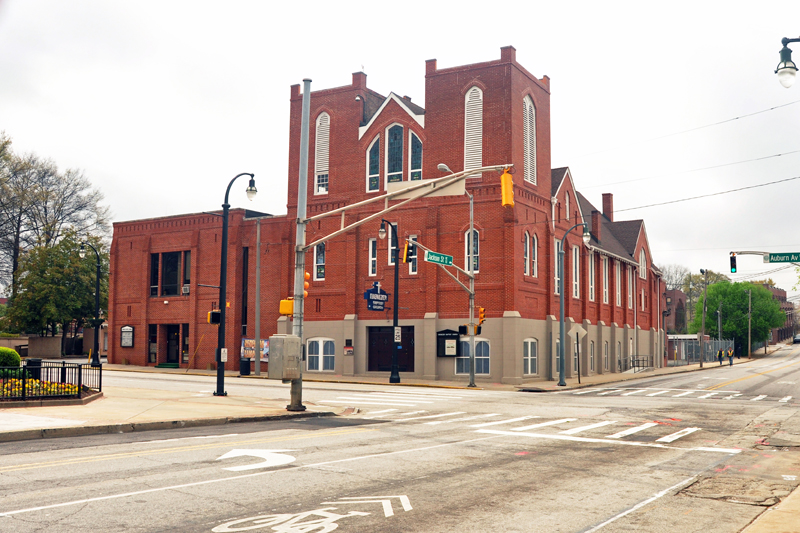
Ebenezer Baptist Church in Atlanta where Martin Luther King, Jr and his father were ministers

Coca Cola Polar Bear ready for kids to shake his paw (At the World of Coca Cola in Atlanta)

One of a pair of Sandhill Cranes that walked by our RV every day in the Bushnell, Florida Escapees RV Park.  They are 3 ft tall & their common call is a trumpeting, rattling gar-oo-oo that is audible for more than a mile.

Ibis near the Bushnell campsite

Car in front of us that claims to run on water - seen in Bradenton, Florida

Vehicle seen in the First United Methodist Church parking lot in Tarpon Springs, Florida - obviously a take-off from the 'Ghostbusters' movie made in 1984


Followers